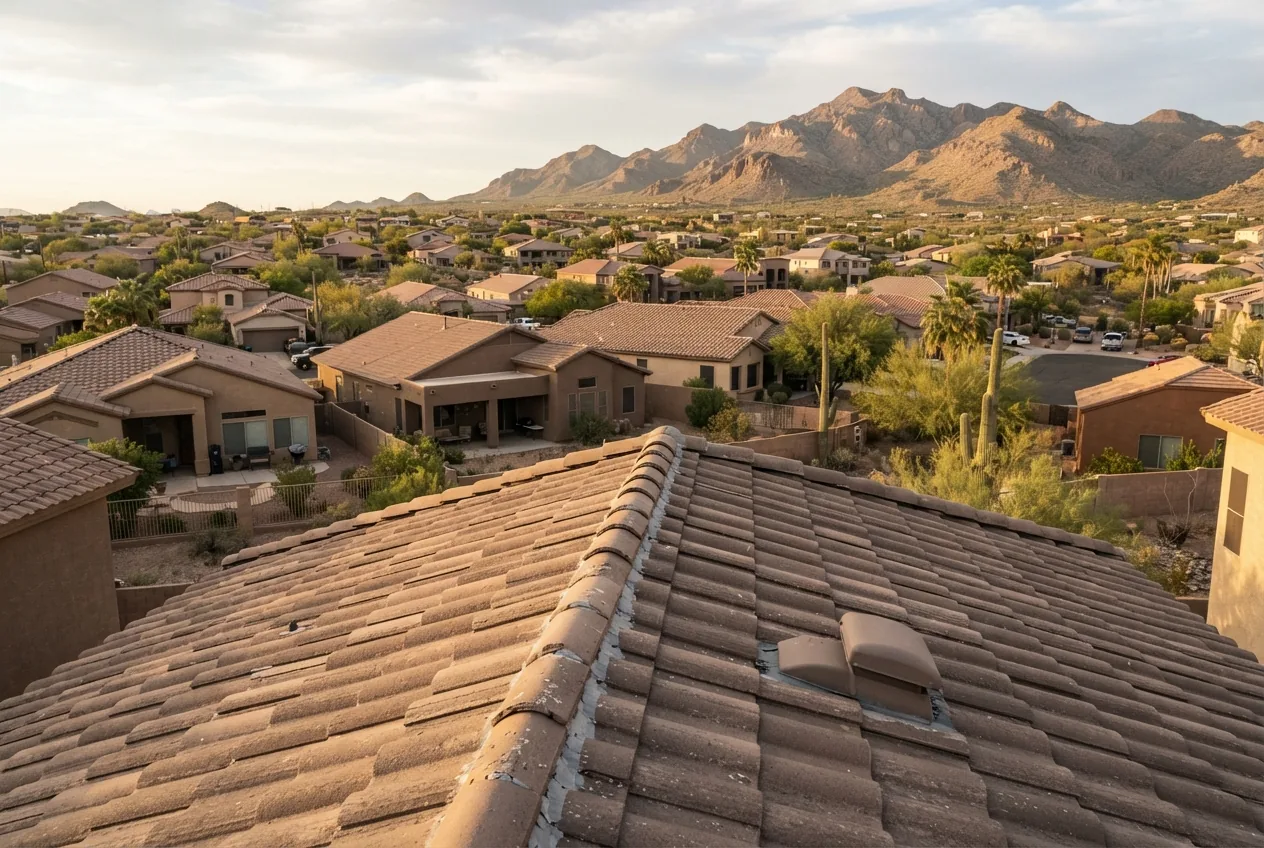
If you own a Tucson home with a concrete tile roof that's been up there since the 1980s or 1990s, you've probably heard some version of this: "The tile will last forever, but the underlayment won't." There's truth in it. There's also a lot of nuance that gets lost when it's used as a sales line. Here's what the underlayment actually does, when an old one is fine, and when it really is the problem.
A Tile Roof Is a Two-Layer System
The tiles on top do most of the work. They're built to shed water, which means rain runs down and off them rather than soaking in. But tiles overlap. They don't seal. Wind-driven rain, water at a poorly flashed joint, or a cracked or slipped tile can let some water get underneath.
That's what the underlayment is for. It's the sheet layer between the tile and the roof deck, and its job is to catch whatever gets past the tiles and carry it down and out. The Tile Roofing Industry Alliance describes it this way in its guidance on repairing damaged tile roofs: in most cases, the underlayment acts as a secondary water barrier.
Secondary doesn't mean unimportant. On a well-built tile roof, the underlayment rarely sees much water. When it does, it's the only thing standing between that water and your ceiling.
When Old Underlayment Is Usually Fine
The same industry guidance makes a point that doesn't get repeated often enough: regardless of its age, underlayment that hasn't been exposed to the elements will likely keep shedding water if it needs to. Underlayment that's stayed covered by intact tile, out of direct sun, can hold up a long time.
So an old roof isn't automatically a failing roof. A 35-year-old tile roof with intact tiles, sound flashing, and no history of leaks may have years left in it. Age is a reason to inspect, not a reason to replace.
When It Isn't
Underlayment gets into trouble when something takes away its protection or asks it to do more than its share. In Tucson, that usually looks like one of these:
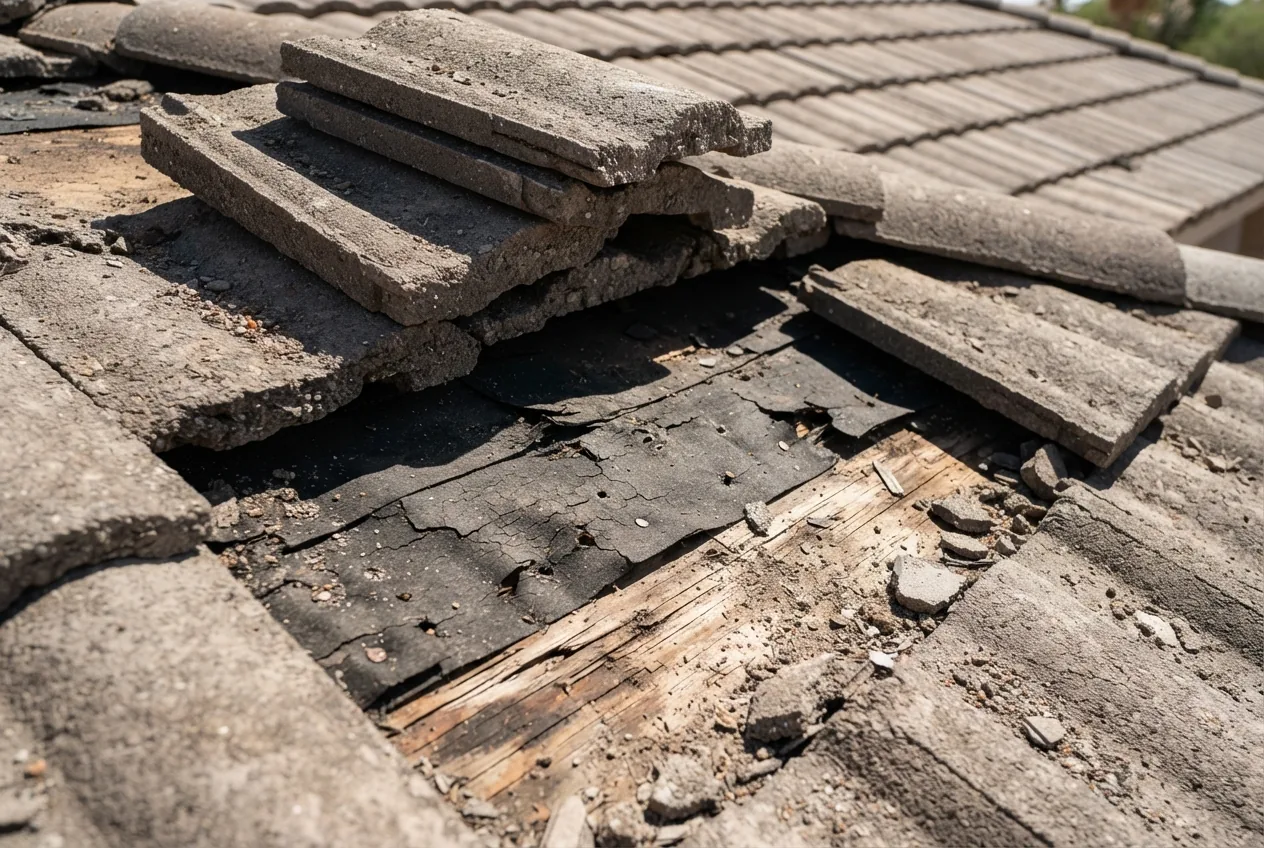
- Cracked or slipped tiles. Once a tile breaks or slides out of place, the underlayment beneath it is exposed to sun, heat, and rain. Desert UV breaks it down quickly when it's uncovered.
- Penetrations and flashing. Vent pipes, rooftop coolers, skylights, and the joints where a roof meets a wall are where water most often gets under the tile. The underlayment around those spots works harder than anywhere else on the roof.
- Valleys. Where two roof planes meet, a lot of water funnels into a narrow channel. Debris that collects there slows the flow and pushes water sideways.
- Previous repairs. A patch done with the wrong material, or tiles that were walked on and cracked during other work, can leave a weak spot behind.
- Heat cycling on exposed areas. Tucson roof surfaces get very hot on summer afternoons and cool off overnight. Material that's exposed to that day after day dries out and gets brittle much faster than material that stays shaded under tile.
Signs the Layer Underneath Needs a Look
- A ceiling stain that shows up after monsoon storms but not during light winter rain
- Tiles that have visibly slipped, cracked, or been displaced by wind or foot traffic
- Staining or daylight visible from the attic along the roof deck
- A leak that comes back after someone "replaced the broken tile"
That last one is the classic. If water has been getting under the tile for a while, swapping the visible broken tile doesn't fix the soaked or damaged underlayment beneath it.
What a Proper Repair Looks Like
A real underlayment repair isn't a tile swap. The roofer lifts the tiles around the problem area and sets them aside, replaces the damaged underlayment (and any soft decking under it), then resets the tiles. Broken tiles get replaced with ones that match the existing roof as closely as possible in color and profile. If your neighborhood has an HOA, it's worth checking whether it has rules about roof tile color before the work starts.
When the underlayment is failing across most of the roof rather than in one area, the honest answer is often a full re-underlayment: the tiles come off, new underlayment goes down across the whole roof, and the good tiles go back on. That's a bigger job, but it usually reuses most of the tile you already have.
The Age of Your Neighborhood Matters
A lot of Tucson's planned communities went up in waves, so homes a few blocks apart can be a decade or more apart in roof age. If you're in one of the 1980s or 1990s subdivisions on the southwest side, this local look at tile roof leaks in Midvale Park walks through how build year lines up with what roofers tend to find there.
Whatever the age, the best next step is the same: have a qualified, licensed roofer actually get on the roof and look at the underlayment and decking where it matters, then explain what they found with photos. That's how you avoid both mistakes, replacing a roof that had years left and patching one that didn't.